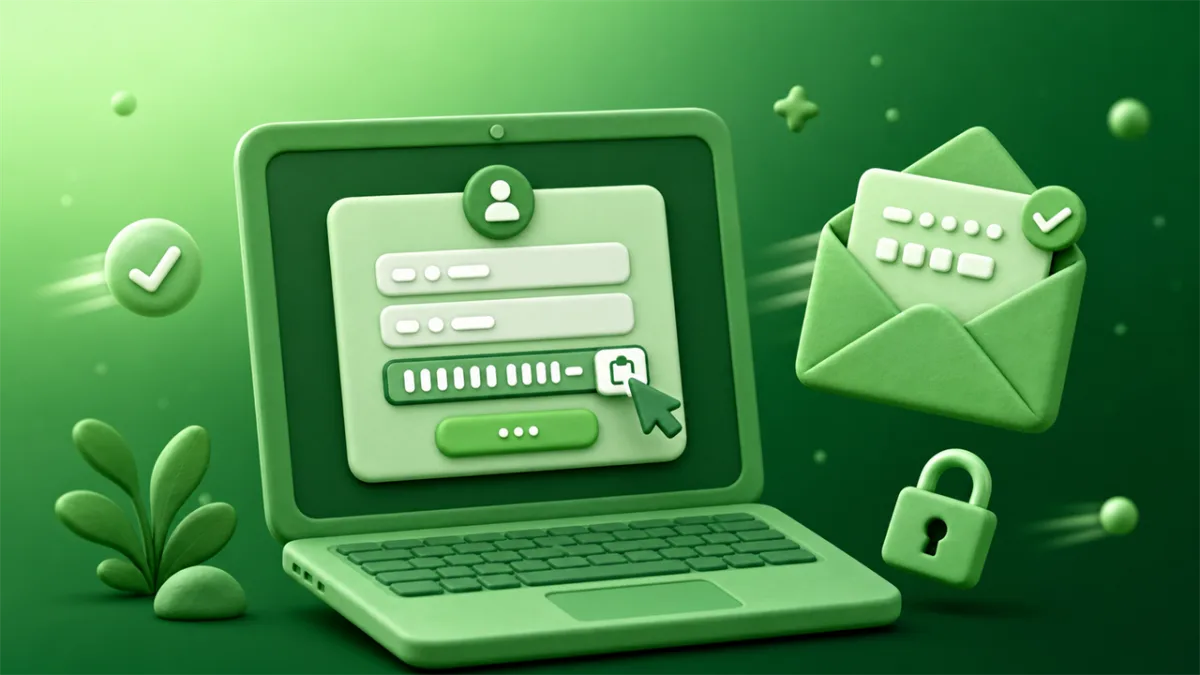
Most people who want to make a fake email address don't actually want a fake one. They want a working one they don't have to give their real inbox to. There's a difference, and it's the whole game. A made-up address like [email protected] receives nothing, so the verification email never arrives and the signup dies. A disposable address looks just as throwaway but is a real, live inbox you can read for a few minutes and then walk away from. Here's how to make one in about ten seconds, and the handful of times it won't work.
Fake email vs. a disposable inbox that actually works
Type [email protected] into a signup box and one of two things happens. Either the site rejects it because the domain doesn't accept mail, or it accepts it, sends a verification link to an inbox that doesn't exist, and you never get past the "check your email" screen. A truly fake address is a dead end the moment a site asks you to confirm it.
What you want instead is a disposable inbox: a real address on a real mail server that you didn't sign up for and won't keep. The verification email lands, you read it, you click the link, and the address quietly expires. To the site, it looks like any other email. To you, it's a buffer between your personal inbox and whatever you just signed up for.
That's the honest version of "make a fake email address," and it's what services like SecondInbox exist to do. If you want the full breakdown of the concept, we wrote a separate piece on what a disposable email address is.
How to make a fake email address in three steps
No account, no password, no personal details. The whole point is that you don't hand over anything to get one.
- Open a temp email service. Go to secondinbox.com. An address is generated for you the moment the page loads. Copy it.
- Paste it into the signup you're trying to get past. Newsletter, free trial, forum, download gate, whatever it is. Submit the form as normal.
- Read the incoming mail and click the verify link. The confirmation email shows up in the inbox on the page. Open it, click through, and you're in. When you're done, close the tab. The address and everything in it get deleted when the inbox expires.
If a verification flow is slow, or you need the address to stick around a bit longer, extend the inbox lifespan with one click instead of watching it expire mid-signup. That single feature is the reason short-lived 10-minute services are frustrating: a Netflix or PayPal verification can take longer than the address lives.
When a fake email address won't work
This is the part most "fake email generator" pages leave out. Disposable email is genuinely useful, but it isn't magic, and pretending otherwise just wastes your time.
- Big platforms block known disposable domains. Gmail, Facebook, and a few others maintain lists of temp-email domains and reject signups from them. If you're making an account you actually need to keep, use your real address.
- The address is receive-only. You can read what lands in it, but you're not sending replies from a disposable inbox. It's for catching a code, not for a conversation.
- Anything you need to recover later is off-limits. Bank logins, your primary social account, a work tool: if you'll ever need a password reset, a temp address is the wrong tool, because it's gone by then.
- It's not an invisibility cloak. A disposable address keeps a random signup form from getting your personal email. It doesn't make you anonymous to the site. We're straight about this in are disposable emails traceable.
Match the tool to the job. For a one-off signup, a free-trial you'll abandon, or a coupon gated behind an email field, a disposable address is perfect. For your actual accounts, it isn't.
Is it legal to make a fake email address?
Using a disposable email to keep a random newsletter or store off your personal inbox is completely legal. It's ordinary privacy hygiene, the same category as putting a spam filter on your phone. Millions of people do it for exactly the reasons above: fewer marketing emails, less exposure if the site gets breached, and no long-term paper trail from a service they used once.
Where it stops being fine is impersonation and fraud. Making an address to pose as someone else, bypass an identity check on a regulated service, or evade a ban you earned is a different thing entirely, and it's the kind of use that's against platform rules at best and illegal at worst. That's not what temp email is for, and it's not what we're describing here.
Fake email or a forwarding alias: which do you want?
A disposable inbox and a forwarding alias solve overlapping problems in different ways. A disposable address is throwaway by design: you read it once and it disappears. An alias (the kind Proton Mail or SimpleLogin offer) is permanent and forwards to your real inbox, so it's better when you want to keep receiving mail from a sender but hide your true address from them.
Rule of thumb: if you never want to hear from this signup again, a disposable address is cleaner. If you want the mail but not the exposure, an alias fits better. We compared the two in detail in temporary email vs. alias forwarding.
Only if it's a real disposable inbox, not a made-up address you invent. A random string you type into a form receives nothing. A disposable address from a service like SecondInbox is a live inbox, so verification codes and confirmation links land in it.
Using a disposable address to protect your privacy on signups is legal. Using one to impersonate someone, commit fraud, or evade a ban is not, and that's a misuse we don't support.
Some will. Google, Facebook, and other large platforms block known disposable-email domains and may reject the signup. Smaller sites usually don't check, so it works for most newsletters, trials, and forums.
Long enough to receive and act on a verification email, and you can extend the inbox with one click if a signup flow is slow. After it expires, the address and its contents are permanently deleted.
The take
"Make a fake email address" is really a request for a working inbox you can throw away. A literally fake address gets you stuck at the verification screen; a disposable one gets you through it and then disappears. Use it for the signups you don't care about keeping, keep your real address for the accounts you do, and you'll cut a surprising amount of spam without much effort.
Need one right now? Open a fresh inbox and paste the address into whatever's asking for it.
Keep reading
What Is a Disposable Email Address? (And When to Use One)
A disposable email address is a temporary inbox you use instead of your real one, then throw away. Here's how it works, when to use it, and where it falls short.
Is Temp Mail Safe? An Honest Look at the Real Risks
Temp mail is safe for signups and trials, risky for anything you need to log back into. Here's exactly when disposable email is safe and when it isn't.